
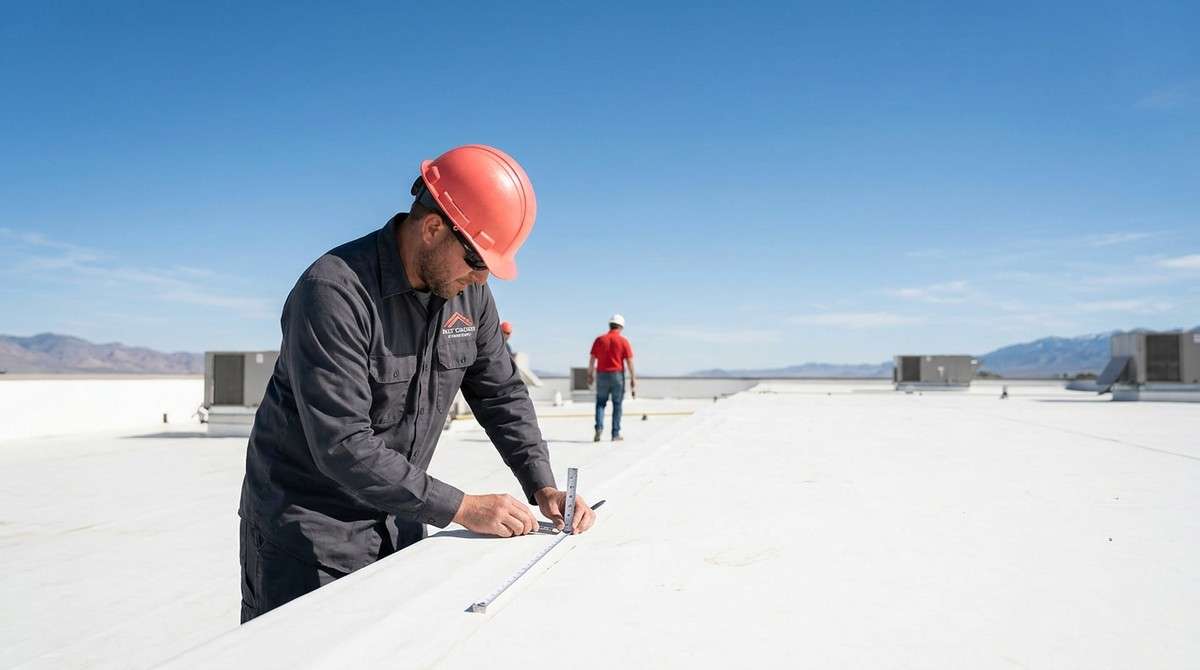
Commercial roof maintenance extends the life of your roofing system and helps avoid the kind of costly emergency repairs that come from small issues going unnoticed. Nevada’s high-desert climate brings unique environmental challenges to local properties — from the intense, high-altitude ultraviolet rays beating down on Reno facilities to the heavy snow loads impacting buildings in the Tahoe area. Rather than waiting for a leak to occur, a scheduled maintenance plan keeps your roofing system resilient year after year.
Table of Contents
1. The ROI of Commercial Roof Maintenance
2. Local Climate Challenges in Northern Nevada
3. Preventing Costly Emergency Repairs
4. What a Comprehensive Maintenance Plan Includes
5. Optimal Timing for Professional Inspections
6. Why Experience Matters in a Roofing Partner
7. FAQs
The ROI of Commercial Roof Maintenance
Roofs that receive proactive care consistently last longer than roofs that don’t. When you compare the cost of a full premature roof replacement against the relatively minor expense of routine inspections, the financial case for maintenance becomes clear. Extending the life of your current roofing system keeps capital expenditures low, predictable, and manageable over the long term.
Maintenance also protects your building’s energy efficiency. SPF roofing systems rely on a protective topcoat to shield the insulating foam layer from UV degradation. If that topcoat wears thin without scheduled reapplication, the underlying foam becomes vulnerable and the building gradually loses thermal resistance — which shows up directly in your monthly utility bills.
Local Climate Challenges in Northern Nevada
Northern Nevada’s extreme temperature fluctuations take a real toll on untreated roofing materials. During summer, surface temperatures on flat commercial roofs can climb dramatically, causing materials to expand during the day and contract rapidly once the sun sets. This constant thermal shock can prematurely age roofing membranes and cause seams to pull apart over time.
High wind events present another challenge for large commercial and industrial properties throughout the region. Sustained gusts can loosen fasteners or lift edge flashings if they aren’t monitored regularly. Routine inspections catch these small vulnerabilities early, before they turn into larger structural problems.
These conditions don’t affect every roof the same way. Older roofing systems, or those that have gone several years without inspection, tend to show wear far more quickly once thermal cycling and wind exposure start compounding on top of existing vulnerabilities. Regular maintenance breaks that cycle by catching small issues — a slightly lifted flashing detail, a hairline crack in a coating — while they’re still inexpensive and straightforward to address, rather than letting them develop into larger structural problems over multiple seasons.
Preventing Costly Emergency Repairs
Operational downtime translates directly into lost revenue, frustrated clients, and potentially damaged inventory. When a winter storm hits, a neglected roof is far more likely to suffer a sudden moisture breach than one that’s been properly maintained. Water intrusion can damage expensive equipment, disrupt daily operations, and create hazardous conditions for employees and customers.
A well-maintained roof rarely experiences sudden, catastrophic failure during a standard storm. Clearing drains of debris and securing loose penetrations before heavy weather arrives keeps a building watertight and operations running smoothly.
What a Comprehensive Maintenance Plan Includes
Effective maintenance involves more than a quick walk around the perimeter once a year. A thorough plan starts with a baseline assessment, documenting the current condition of every seam, penetration, and drainage point on the property. From there, a maintenance schedule can be tailored to the specific material, age, and environmental exposure of the building.
Routine maintenance typically includes:
-
Clearing debris from scuppers, drains, and gutters
-
Checking the adhesion of sealants at seams and penetrations
-
Evaluating the reflectivity and condition of roof coatings
-
Applying targeted touch-ups to any minor cracking before it spreads
-
Documenting roof condition to support manufacturer warranty requirements
Handling these small corrections proactively prevents water from migrating beneath the surface and saturating the underlying insulation.
Optimal Timing for Professional Inspections
For most commercial roofs, two formal evaluations per year — typically in spring and fall — offer the best balance of protection and practicality. A post-winter inspection in the spring addresses any damage caused by ice expansion or heavy snow loads, giving property owners time to arrange corrective work during the dry summer months.
The fall inspection prepares the roof for the upcoming freezing temperatures and winter storms. This visit typically focuses on clearing gutters and drains of debris, since blocked drainage can cause water to pond, freeze, and expand — leading to serious membrane damage once temperatures drop.
Why Experience Matters in a Roofing Partner
Local experience matters when it comes to commercial roof maintenance, since the specific stressors a roof faces vary significantly by region and climate. A contractor familiar with Northern Nevada’s thermal swings, UV exposure, and winter weather patterns is better equipped to build a maintenance plan that actually addresses those conditions, rather than applying a generic, one-size-fits-all approach.
Working with an established local contractor also provides continuity — the same team that inspects your roof today is more likely to be available to honor warranties and follow-up service for years to come. That kind of long-term relationship also means your contractor builds a detailed history of your specific roof over time, which can make it easier to spot subtle changes in condition that a first-time inspector might otherwise miss.
FAQs
How often should commercial roofs be maintained?
Most industry professionals recommend two comprehensive evaluations per year, typically in spring and fall, with additional checks after major storm events in areas prone to severe weather.
Does regular maintenance affect manufacturer warranties?
Yes. Many commercial roofing warranties require documented, regular maintenance to remain valid. Without that documentation, a manufacturer may deny a warranty claim even if the roof failure would otherwise be covered.
What does a routine maintenance visit typically include?
A standard visit includes a visual inspection of membranes, flashing, and drainage systems, debris removal from gutters and scuppers, and minor touch-ups on vulnerable seams, followed by a report outlining the roof’s current condition.
If you’re unsure about the current condition of your commercial roof, Roof Crafters West can walk you through a maintenance plan tailored to your building. Request a free estimate today by calling 775-200-9440 or visiting roofcrafterswest.com.